MODULE 1: THE HISTORY AND EVOLUTION OF YIN YOGA
Explore the history and evolution of Yin Yoga, including the influences, teachers and ideas that have shaped the modern practice.
MODULE 2: WHY YIN YOGA?
Explore the purpose of Yin Yoga, what makes it different from more dynamic forms of yoga and why stillness and sustained holds have a place in our practice.
MODULE 3: YIN AND YANG
Explore the relationship between Yin and Yang and their complementary qualities of movement and stillness, effort and rest, activity and receptivity.
MODULE 4: THE FUNCTIONAL APPROACH TO YIN YOGA
Explore the functional approach to Yin Yoga and why a pose does not need to look the same in every body.
“The ultimate limit is your bones. If you’re fighting your skeleton, you’re walking around with two eyes blind.” – Paul Grilley
Instead we ask:
What is the function of this pose?
What area are we trying to affect?
What is limiting this student’s movement?
Is it tension or compression?
What variation might work better for this body?
MODULE 5: ANATOMY, FASCIA AND CONNECTIVE TISSUE
Explore functional anatomy, skeletal variation, joints, muscles, range of movement, tension and compression, fascia and connective tissue, and how individual anatomy influences Yin Yoga practice.
MODULE 6: THE NERVOUS SYSTEM, BREATH AND MINDFULNESS
Explore the autonomic nervous system, stress, regulation, interoception and the relationship between breath, attention, stillness and nervous system state.
We explore the nervous system, stress, breath, meditation and mindfulness, including different perspectives on how these can influence our experience of Yin Yoga.
MODULE 7: YIN YOGA POSES, PRINCIPLES AND SEQUENCING
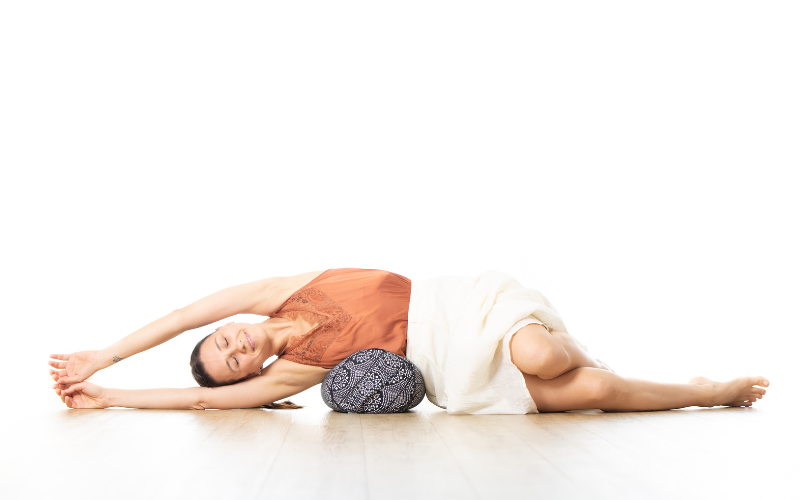
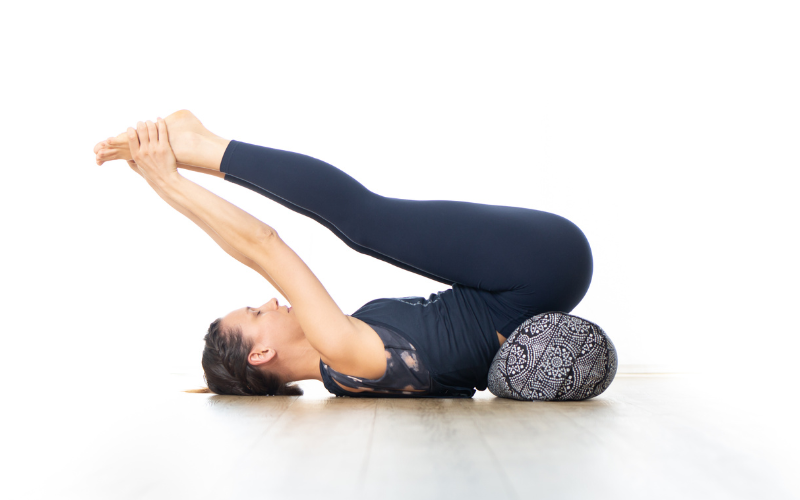
Explore the key Yin Yoga poses, their functional purpose, variations, modifications and use of props.
Learn the principles that underpin the practice and how to create purposeful sequences based on the needs of individual students.
MODULE 8: TEACHING METHODOLOGY, TRADITIONAL CHINESE MEDICINE AND YOGA PHILOSOPHY
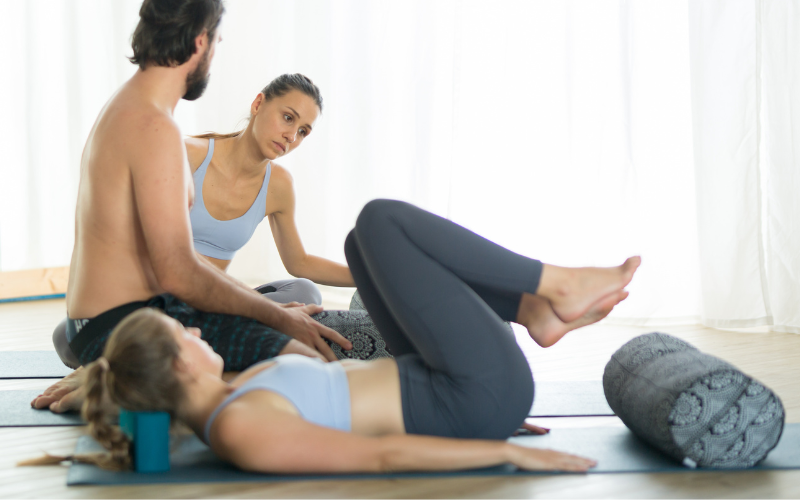
Develop the skills to teach Yin Yoga with confidence, including language, cueing, observation, adaptation and creating choice for students.
We also touch on the Traditional Chinese Medicine concepts that have influenced Yin Yoga, alongside philosophical ideas that can deepen our understanding of the practice.